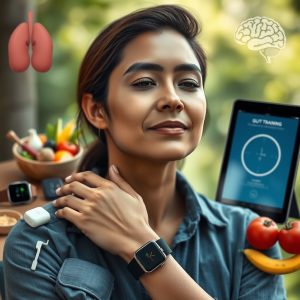
The Alchemy of Aging: How Continuous Glucose Monitoring, Intermittent Fasting, and Cellular Regeneration Are Crafting the Future of Longevity Medicine

The pursuit of longevity has transcended the realm of myth and entered the domain of science, where cutting-edge technologies and time-honored practices converge to redefine what it means to age. At the heart of this revolution lies a trio of powerful tools: continuous glucose monitoring (CGM), intermittent fasting, and cellular regeneration. Together, they form a dynamic framework that not only extends lifespan but enhances healthspan—the period of life spent in vitality and free from chronic disease. This is not about defying aging; it’s about mastering it.
The Glucose-Longevity Nexus
Continuous glucose monitoring has emerged as a cornerstone of metabolic fitness, offering real-time insights into how diet, stress, and activity influence blood sugar levels. For decades, glucose was primarily associated with diabetes management, but its role in longevity is far more profound. Chronic glucose spikes and insulin resistance are now recognized as accelerants of cellular aging, contributing to inflammation, oxidative stress, and the deterioration of mitochondrial function. By providing granular data, CGMs empower individuals to make precise dietary and lifestyle adjustments, turning metabolic health into a finely tuned instrument.
Research has shown that maintaining stable glucose levels can reduce the risk of age-related diseases, from cardiovascular disorders to neurodegenerative conditions. The beauty of CGMs lies in their democratization of metabolic awareness. No longer reserved for diabetics, these devices are now wielded by biohackers, athletes, and longevity enthusiasts who understand that glucose is not just fuel—it’s a biomarker of aging itself. When paired with personalized nutrition, CGMs become a compass, guiding users toward foods and habits that sustain energy, clarity, and cellular integrity.
The Fasting Paradox: Starving to Thrive
Intermittent fasting (IF) has evolved from a dietary trend into a pillar of longevity medicine, backed by robust scientific evidence. The premise is simple: by cycling between periods of eating and fasting, the body undergoes a cascade of biological processes that promote cellular repair, autophagy (the body’s way of cleaning out damaged cells), and metabolic flexibility. Fasting is not about deprivation; it’s about strategic rejuvenation.
One of the most compelling mechanisms of IF is its ability to enhance insulin sensitivity, a critical factor in preventing metabolic syndrome and type 2 diabetes. Studies have also linked fasting to reduced inflammation, improved cognitive function, and even increased production of brain-derived neurotrophic factor (BDNF), a protein that supports neuronal health. For those seeking longevity, fasting acts as a reset button, recalibrating the body’s metabolic and cellular machinery to operate with greater efficiency.
But fasting is not a one-size-fits-all solution. The optimal fasting window varies depending on individual goals, genetics, and lifestyle. Some thrive on a 16:8 protocol (16 hours of fasting, 8-hour eating window), while others benefit from more extended fasts, such as 24 or even 48 hours. The key is to listen to the body and, when possible, leverage tools like CGMs to monitor how fasting impacts glucose levels and overall well-being.
Cellular Regeneration: Rewriting the Aging Code
If glucose monitoring and fasting are the tools that slow aging, cellular regeneration is the force that reverses it. Advances in longevity medicine have unveiled the potential of senolytics—compounds that target and eliminate senescent cells, the so-called “zombie cells” that accumulate with age and contribute to tissue dysfunction. By clearing these cells, senolytics can restore youthful function to organs and tissues, effectively turning back the biological clock.
Another frontier in cellular regeneration is the use of NAD+ boosters, such as nicotinamide riboside (NR) and nicotinamide mononucleotide (NMN). NAD+ is a coenzyme essential for DNA repair, energy production, and cellular resilience. As we age, NAD+ levels decline, impairing these vital processes. Supplementing with NAD+ precursors has been shown to enhance mitochondrial function, improve muscle performance, and even extend lifespan in animal studies. Human trials are underway, but the early results are promising, suggesting that NAD+ could be a game-changer in the quest for longevity.
Beyond senolytics and NAD+, emerging therapies like stem cell treatments and epigenetic reprogramming are pushing the boundaries of what’s possible. Stem cell therapy, for instance, holds the potential to regenerate damaged tissues, while epigenetic reprogramming aims to reset the aging clock at the genetic level. These approaches are still in their infancy, but they offer a glimpse into a future where aging is not an inevitable decline but a modifiable condition.
The Synergy of Longevity Tools
While each of these tools—CGMs, intermittent fasting, and cellular regeneration—is powerful on its own, their true potential lies in their synergy. Imagine a scenario where a CGM alerts you to a glucose spike after a meal, prompting you to adjust your diet or extend your fasting window. Over time, these adjustments improve insulin sensitivity, reducing the burden on your cells and slowing the accumulation of senescent cells. Meanwhile, NAD+ boosters and senolytics work in the background, repairing and rejuvenating your cellular landscape. This is the alchemy of aging: a harmonious blend of technology, biology, and ancient wisdom.
Longevity medicine is not about chasing immortality but about compressing morbidity—squeezing the years of decline into the shortest possible span. It’s about living not just longer, but better, with the energy, clarity, and vitality to savor every moment. The tools are here, the science is advancing, and the future of aging is being rewritten. The question is no longer whether we can extend healthspan, but how far we’re willing to go to unlock it.
As we stand on the precipice of this new era, one thing is clear: the alchemy of aging is not a distant dream but a tangible reality, waiting to be embraced by those bold enough to redefine the boundaries of human potential. The journey begins with a single step—monitoring a glucose spike, extending a fast, or nourishing a cell—but the destination is nothing short of revolutionary.