The Rhythm of Recovery: How Collaborative Care Models and Real-Time Analytics Compose Bespoke Healing Journeys

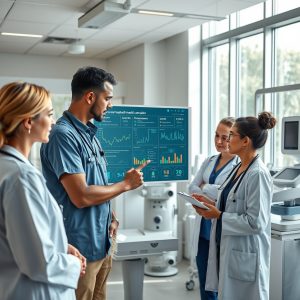
In the ever-evolving landscape of healthcare, the shift from fragmented treatment to a cohesive, patient-centered approach is not just a trend—it’s a transformation. At the heart of this change lies the fusion of collaborative care models and real-time health analytics, two pillars that are redefining how healing is orchestrated. No longer is healthcare a solo performance; it’s a symphony where every note, from the clinician’s expertise to the patient’s voice, plays a critical role in composing a bespoke recovery journey.
The Power of Collaboration in Care
Traditional healthcare often operated in silos, with specialists focusing narrowly on their domains, sometimes at the expense of the bigger picture. Today, collaborative care models are dismantling these barriers, fostering an environment where multidisciplinary teams—physicians, nurses, therapists, social workers, and even patients—work in unison. This approach ensures that every aspect of a patient’s well-being is addressed, from physical health to emotional and social factors.
For instance, consider a patient recovering from a cardiac event. Under a collaborative model, their cardiologist might work alongside a nutritionist to tailor a heart-healthy diet, a physical therapist to design a safe exercise regimen, and a mental health professional to address anxiety or depression. The result? A holistic treatment integration that doesn’t just treat the disease but nurtures the whole person. This kind of synergy doesn’t just improve outcomes—it transforms the patient experience, making healing feel less like a series of isolated interventions and more like a cohesive, supportive journey.
The Role of Real-Time Analytics in Personalizing Care
While collaboration lays the foundation, real-time health analytics provide the dynamic insights needed to adapt and refine care on the fly. Imagine a world where a patient’s vital signs, medication adherence, and even emotional well-being are continuously monitored and analyzed, allowing clinicians to make data-driven clinical decisions that are as responsive as they are precise. This isn’t futuristic thinking—it’s the reality of modern healthcare, where wearable devices, mobile apps, and integrated health platforms are turning data into actionable intelligence.
Take, for example, a diabetic patient using a continuous glucose monitor. The device doesn’t just track blood sugar levels; it sends real-time alerts to both the patient and their care team if levels veer into dangerous territory. This immediate feedback loop enables responsive treatment adjustments, preventing complications before they arise. Similarly, predictive analytics can identify patients at high risk of readmission, allowing care teams to intervene proactively with preventive treatment protocols tailored to the individual’s needs. The result is a healthcare system that doesn’t just react to illness but anticipates and prevents it, shifting the focus from treatment to comprehensive wellness management.
Bridging the Gap Between Data and Humanity
Yet, for all the promise of technology, the true magic of modern healthcare lies in its ability to balance data with humanity. Real-time analytics and digital health monitoring are powerful tools, but they are most effective when paired with the irreplaceable human elements of empathy, communication, and trust. This is where patient-centric wellness plans come into play, ensuring that technology serves as an enabler rather than a replacement for the human touch.
Consider the story of a cancer patient undergoing chemotherapy. While data from their treatment can track side effects and efficacy, it’s the oncologist’s ability to listen, adjust dosages based on the patient’s feedback, and provide emotional support that truly makes a difference. Here, technology-assisted therapy and evidence-based treatment pathways work hand-in-hand with the clinician’s expertise to create a bespoke recovery journey that is as unique as the patient themselves. This blend of science and compassion is what defines human-centric healthcare delivery, where the goal is not just to heal but to empower.
The Future of Seamless Care Coordination
As healthcare continues to evolve, the integration of collaborative care models and real-time analytics is paving the way for a new era of seamless care coordination. Picture a healthcare ecosystem where every provider, from the primary care physician to the specialist, has access to the same up-to-date information, where transitions between care settings—hospital to home, clinic to rehabilitation—are smooth and uninterrupted. This is the vision of value-based medical services, where the focus shifts from the quantity of care to the quality of outcomes.
For patients, this means no more repeating their medical history at every appointment, no more lost test results, and no more feeling like a number in a system. Instead, they experience a patient experience optimization that prioritizes their needs, preferences, and goals. For clinicians, it means having the tools and support to deliver outcome-focused clinical care that is both efficient and effective. And for the healthcare system as a whole, it represents a shift toward sustainability, where resources are allocated based on what truly benefits patients, not just what generates revenue.
In this new paradigm, healing is no longer a linear path but a dynamic, adaptive process where every decision is informed by data, every action is guided by collaboration, and every outcome is measured by the patient’s well-being. It’s a future where healthcare doesn’t just treat illness—it nurtures health, one personalized journey at a time. The tools and strategies are already here; what’s needed now is the collective will to embrace them, to see beyond the constraints of the past and imagine what’s possible when care is truly centered on the people it serves. The rhythm of recovery is changing, and with it, the very essence of what it means to heal.