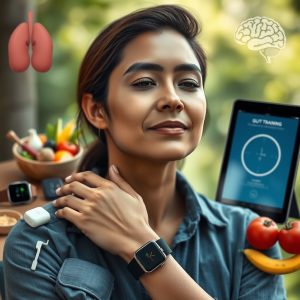
The Rhythm of Resilience: How Somatic Exercise, Contrast Therapy, and Wearable Tech Harmonize Cortisol and Immune Health
In the relentless cadence of modern life, stress has become an unwelcome conductor, orchestrating a symphony of cortisol spikes, immune suppression, and metabolic chaos. Yet, emerging research and ancient practices are converging to offer a counterpoint—a rhythm of resilience that restores balance to body and mind. At the heart of this movement lies the interplay between somatic exercise, contrast therapy, and wearable health technology, a trio of tools that are redefining how we regulate stress, bolster immune resilience, and cultivate longevity.
The Science of Somatic Movement: Rewiring the Stress Response
Somatic exercise, a practice rooted in the mindful exploration of movement, is gaining traction as a powerful antidote to chronic stress. Unlike traditional workouts that prioritize repetition and intensity, somatic practices—such as Feldenkrais, Alexander Technique, and yoga nidra—focus on internal awareness, gentle movement, and breathwork to release tension stored in the body. Research published in Frontiers in Psychology highlights how these practices can lower cortisol levels by engaging the parasympathetic nervous system, the body’s natural brake pedal for stress.
The magic of somatic exercise lies in its ability to recalibrate the hypothalamic-pituitary-adrenal (HPA) axis, the command center for the body’s stress response. When this axis is dysregulated—often due to prolonged stress—it can lead to a cascade of health issues, from insomnia to inflammation. By incorporating slow, deliberate movements and breathwork, somatic practices help dissolve the physical manifestations of stress, such as clenched jaws, tight shoulders, and shallow breathing, while simultaneously training the brain to respond to stressors with greater equanimity.
Wearable Tech: The Real-Time Feedback Loop for Stress Mastery
While somatic exercise provides the foundation for stress resilience, wearable health technology offers the real-time data needed to fine-tune the process. Devices like Oura Rings, Whoop bands, and Apple Watches now track more than just steps and heart rate—they monitor heart rate variability (HRV), sleep quality, and even skin temperature, all of which serve as proxies for stress and recovery. HRV, in particular, has emerged as a critical biomarker for stress resilience, with studies in Psychophysiology showing that higher HRV correlates with better emotional regulation and lower cortisol levels.
The beauty of wearable tech lies in its ability to translate abstract physiological data into actionable insights. For example, a sudden drop in HRV might signal that your body is in a heightened state of stress, prompting you to pause and engage in a somatic exercise or breathing technique. Over time, this feedback loop empowers individuals to recognize their stress triggers and respond proactively, rather than reactively. It’s a shift from managing stress to mastering it, one data point at a time.
Contrast Therapy: The Ancient-Modern Hack for Immune Resilience
If somatic exercise and wearable tech form the yin of stress resilience, contrast therapy—the practice of alternating between hot and cold exposures—serves as the yang. Rooted in traditions like Finnish saunas and Russian banyas, contrast therapy has been scientifically validated as a potent tool for enhancing immune function and reducing inflammation. A landmark study in PLOS ONE found that regular sauna use was associated with a 40% reduction in the risk of respiratory infections, while cold exposure has been shown to increase levels of adaptive immune cells, such as natural killer (NK) cells and T-cells.
The mechanism behind contrast therapy’s immune-boosting effects lies in its ability to trigger hormesis, a biological phenomenon where controlled stress (like heat or cold) strengthens the body’s adaptive responses. Heat exposure, for instance, induces the production of heat shock proteins, which help repair damaged cells and reduce inflammation. Cold exposure, on the other hand, activates brown fat, a type of fat that burns calories to generate heat, while also stimulating the release of norepinephrine, a hormone that enhances focus and immune vigilance.
The Synergy of Somatic Exercise and Contrast Therapy
When combined, somatic exercise and contrast therapy create a synergistic effect that amplifies their individual benefits. For example, engaging in a somatic practice like yoga or tai chi after a sauna session can deepen relaxation by further lowering cortisol levels and enhancing HRV. Conversely, a cold plunge following a somatic session can help