The Dawn of Precision Medicine: How AI and Gene Therapy Are Redefining Healthcare
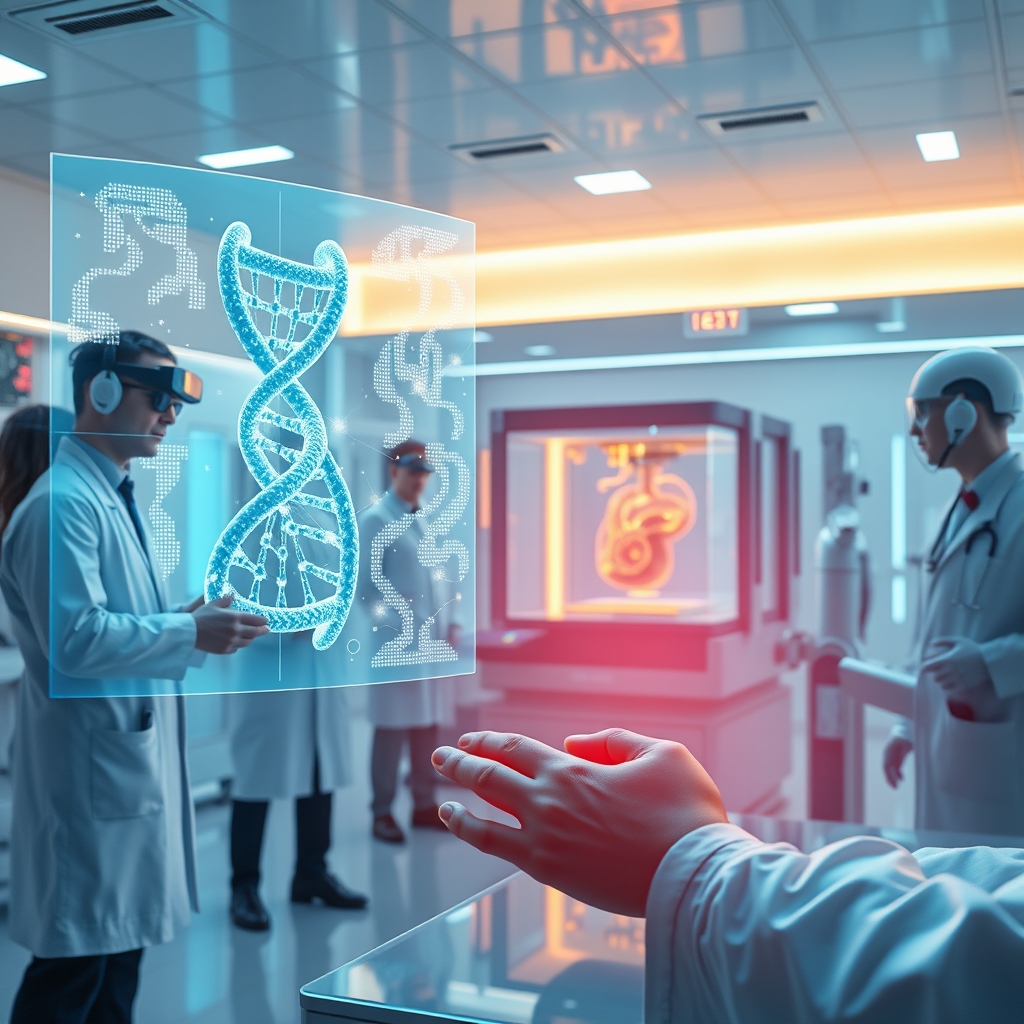
In the ever-evolving landscape of healthcare, a quiet revolution is underway—one that promises to transform how we prevent, diagnose, and treat diseases. At the heart of this transformation lies precision medicine, a paradigm shift that moves beyond the one-size-fits-all approach to tailor medical interventions to the unique genetic, environmental, and lifestyle factors of each individual. Coupled with advancements in artificial intelligence (AI) diagnostics and gene therapy, precision medicine is not just a futuristic concept but a tangible reality reshaping patient care today.
The Genetic Blueprint: Unlocking Personalized Treatments
For decades, medicine has relied on broad-spectrum treatments, where patients with similar symptoms often receive the same medications, regardless of their genetic makeup. However, this approach overlooks the intricate variations in human DNA that influence how individuals respond to drugs. Enter personalized pharmacology, a field that leverages genetic testing to predict a patient’s response to specific treatments. By analyzing a person’s genome, clinicians can now identify which medications will be most effective—and which might cause harmful side effects.
One of the most groundbreaking applications of this approach is in targeted cancer therapy. Traditional chemotherapy, while effective, often damages healthy cells alongside cancerous ones, leading to severe side effects. In contrast, targeted therapies zero in on specific genetic mutations driving tumor growth. For example, drugs like Trastuzumab (Herceptin) have revolutionized the treatment of HER2-positive breast cancer by blocking the protein that fuels tumor proliferation. This level of precision not only improves survival rates but also enhances patients’ quality of life by minimizing unnecessary toxicity.
The Role of AI in Diagnostics: Faster, Smarter, More Accurate
While genetic testing provides the foundation for personalized medicine, AI diagnostics are accelerating its adoption by making sense of vast amounts of data at unprecedented speeds. Machine learning algorithms can analyze medical images, electronic health records, and even real-time patient monitoring data to detect patterns that human eyes might miss. For instance, AI-powered tools are now capable of identifying early signs of diseases like Alzheimer’s or diabetic retinopathy with accuracy rates that rival or surpass those of experienced clinicians.
In oncology, AI is being used to predict how tumors will respond to different treatments, allowing oncologists to tailor therapies with greater confidence. Companies like PathAI and Tempus are developing platforms that integrate genomic data with clinical outcomes, enabling more informed decision-making. The result? Faster diagnoses, reduced trial-and-error in treatment plans, and ultimately, better patient outcomes.
Gene Therapy: Rewriting the Code of Life
If precision medicine is the future of healthcare, gene therapy is one of its most powerful tools. This innovative approach involves modifying or replacing faulty genes to treat or even cure genetic disorders. Unlike traditional drugs that manage symptoms, gene therapy aims to address the root cause of disease by correcting the underlying genetic defects.
One of the most celebrated successes in gene therapy is the treatment of spinal muscular atrophy (SMA), a rare and often fatal genetic disorder. In 2019, the FDA approved Zolgensma, a one-time gene therapy that delivers a functional copy of the missing or defective SMN1 gene to motor neurons. For infants born with SMA, this therapy can mean the difference between a lifetime of disability and the chance to walk, breathe, and live independently. Similarly, Luxturna, approved in 2017, restores vision in patients with a rare form of inherited blindness by replacing a defective gene in the retina.
Beyond rare genetic disorders, gene therapy is also showing promise in treating more common conditions, such as sickle cell disease and certain types of cancer. CAR-T cell therapy, a form of immunotherapy that genetically engineers a patient’s own immune cells to attack cancer, has achieved remarkable results in blood cancers like leukemia and lymphoma. These breakthroughs are not just extending lives—they are redefining what it means to live with a chronic or previously incurable disease.
The Frontier of Regenerative Medicine and Bioprinting
While gene therapy repairs or replaces faulty genes, regenerative medicine takes a different approach by harnessing the body’s own healing mechanisms to restore damaged tissues and organs. Stem cell therapies, for example, are being explored for conditions ranging from heart disease to Parkinson’s, with the potential to regenerate healthy cells and reverse degeneration. In 2021, the first patient received a lab-grown bladder created from their own cells, marking a significant milestone in the field of cellular therapeutics.
Complementing these advancements is bioprinting, a cutting-edge technology that uses 3D printing to create living tissues and organs. Researchers are already printing skin grafts for burn victims, cartilage for joint repairs, and even miniature organs for drug testing. While fully functional, transplantable organs are still years away, the progress in bioprinting is nothing short of revolutionary. Imagine a future where organ shortages are a thing of the past, and patients receive custom-made organs grown from their own cells—eliminating the risk of rejection and the need for lifelong immunosuppressant drugs.
The Microbiome and Beyond: Expanding the Horizons of Precision Medicine
Precision medicine is not limited to genetics and AI. Another frontier gaining traction is microbiome therapeutics, which explores the role of the trillions of microbes living in and on our bodies. These microscopic communities play a crucial role in digestion, immunity, and even mental health. Disruptions in the microbiome have been linked to conditions like obesity, inflammatory bowel disease, and depression. By analyzing an individual’s microbiome, researchers are developing personalized probiotics and fecal microbiota transplants to restore balance and promote health.
Similarly, nanomedicine is opening new avenues for targeted drug delivery. Nanoparticles can be engineered to carry medications directly to diseased cells, sparing healthy tissue and reducing side effects. For example, lipid nanoparticles were instrumental in delivering mRNA vaccines during the COVID-19 pandemic, showcasing the potential of nanotechnology in vaccine innovation. As this field evolves, we can expect to see more precise and efficient treatments for a wide range of diseases.
Challenges and Ethical Considerations
Despite its immense promise, precision medicine is not without challenges. The cost of genetic testing and advanced therapies remains prohibitively high for many patients, raising concerns about equitable access. Additionally, the sheer volume of data generated by precision medicine initiatives poses risks to patient privacy and data security. Ethical questions also arise around genetic editing, particularly with technologies like CRISPR, which could potentially be used to alter human embryos and create so-called “designer babies.”
Regulatory frameworks are struggling to keep pace with these rapid advancements. Governments and healthcare institutions must collaborate to establish guidelines that ensure the safe and ethical use of precision medicine technologies while fostering innovation. Public education and transparency will be key to building trust and ensuring that these breakthroughs benefit society as a whole.
The journey of precision medicine is still in its early stages, but the progress made so far is a testament to human ingenuity and the relentless pursuit of better health. As AI continues to refine diagnostics, gene therapy rewrites the possibilities of treatment, and regenerative medicine pushes the boundaries of what the body can heal, we stand on the brink of a new era in healthcare. This is not just about extending lifespans—it’s about enhancing the quality of every moment, tailoring care to the individual, and turning the once-impossible into the everyday. The future of medicine is not a distant dream; it is unfolding before our eyes, one personalized treatment at a time.