The Unseen Bridge: How Somatic Exercise and Contrast Therapy Are Rewiring Stress, Immunity, and Longevity
The human body is a masterpiece of interconnected systems, each influencing the other in ways we are only beginning to understand. Among the most profound yet underappreciated connections is the relationship between physical movement, temperature regulation, and the body’s stress response. Somatic exercise and contrast therapy—two practices rooted in ancient wisdom and validated by modern science—are emerging as powerful tools to recalibrate the nervous system, enhance immune resilience, and extend longevity. Together, they form an unseen bridge between mind and body, offering a pathway to vitality that transcends conventional fitness paradigms.
The Science of Somatic Movement: Beyond Traditional Exercise
Somatic exercise is not your typical workout. Unlike high-intensity interval training or weightlifting, which focus on external performance metrics, somatic practices emphasize internal awareness and the mindful release of chronic tension. Rooted in the work of pioneers like Thomas Hanna and Moshe Feldenkrais, somatic movement is a form of neuromuscular re-education that helps individuals reconnect with their bodies, often after years of disconnection due to stress, injury, or sedentary lifestyles.
Research in the field of psychoneuroimmunology reveals that somatic practices can significantly reduce cortisol levels—the hormone most closely associated with chronic stress. Elevated cortisol not only impairs cognitive function and disrupts sleep but also weakens immune resilience by suppressing the activity of key immune cells. By engaging in slow, deliberate movements that prioritize breath and body awareness, individuals can downregulate the sympathetic nervous system (responsible for the “fight or flight” response) and activate the parasympathetic nervous system, which governs rest, digestion, and recovery.
A 2022 study published in Frontiers in Psychology found that participants who engaged in a six-week somatic movement program experienced a 28% reduction in perceived stress and a 15% improvement in immune markers, including increased natural killer cell activity. These findings underscore the potential of somatic exercise as a cornerstone of preventive healthcare, particularly for those navigating high-stress environments or chronic illness.
Contrast Therapy: The Ancient Practice Meets Modern Longevity Science
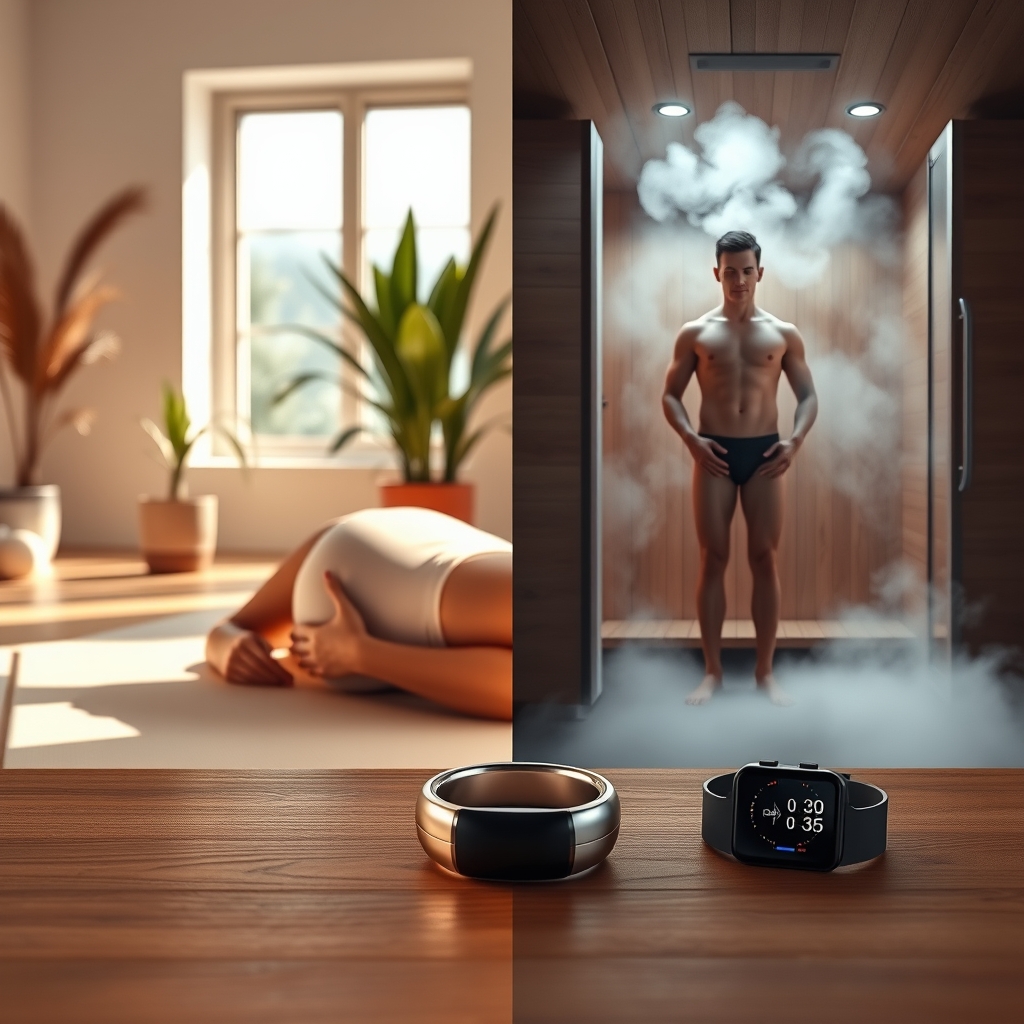
If somatic exercise is the gentle hand guiding the nervous system back to balance, contrast therapy is the dynamic force that shocks it into resilience. Also known as thermal cycling, contrast therapy involves alternating between extreme heat and cold—think saunas followed by ice baths—to stimulate a cascade of physiological adaptations. This practice, which dates back to ancient Roman and Nordic traditions, is now being embraced by biohackers, athletes, and longevity researchers for its profound effects on cellular regeneration and immune function.
The mechanism behind contrast therapy lies in its ability to induce hormesis—a biological phenomenon where a mild stressor triggers adaptive responses that make the body stronger. Exposure to cold, for instance, activates brown adipose tissue (BAT), a type of fat that burns calories to generate heat. This process not only enhances metabolic fitness but also reduces inflammation, a key driver of aging and chronic disease. Meanwhile, heat exposure increases the production of heat shock proteins, which help repair damaged cells and improve mitochondrial function, the powerhouses of our cells.
A groundbreaking study from the Journal of Applied Physiology demonstrated that regular contrast therapy could increase the expression of antioxidant enzymes by up to 40%, effectively slowing oxidative stress—a major contributor to cellular aging. Additionally, the practice has been shown to boost the production of norepinephrine, a neurotransmitter that enhances focus, mood, and immune vigilance. For those seeking to optimize longevity, contrast therapy offers a simple yet potent tool to enhance both physical and cognitive resilience.
The Synergy of Somatic Exercise and Contrast Therapy
While somatic exercise and contrast therapy are powerful on their own, their true potential is unlocked when combined. Somatic practices prepare the nervous system for the stress of thermal cycling by cultivating a state of calm awareness, while contrast therapy amplifies the body’s adaptive capacity, making it more responsive to the subtle cues of somatic movement. This synergy creates a feedback loop that enhances cortisol regulation, immune resilience, and overall vitality.
Consider the example of an individual recovering from chronic stress. Somatic exercise helps them release stored tension in the muscles and reconnect with their breath, while contrast therapy provides a controlled stressor that trains the body to adapt more efficiently. Over time, this combination can rewire the stress response, making the individual less reactive to external pressures and more resilient in the face of adversity. Wearable health technology, such as heart rate variability (HRV) monitors, can further enhance this process by providing real-time feedback on the body’s response to these practices, allowing for personalized optimization.
Practical Applications for Everyday Life
Incorporating somatic exercise and contrast therapy into daily life doesn’t require a complete lifestyle overhaul. For somatic movement, start with simple practices like the Feldenkrais Method or Hanna Somatics, which can be done in as little as 10-15 minutes a day. Focus on slow, mindful movements that target areas of chronic tension, such as the shoulders, hips, or lower back. Pair these movements with deep, diaphragmatic breathing to enhance their stress-relieving effects.
For contrast therapy, begin with shorter exposures to build tolerance. A common protocol involves spending 10-15 minutes in a sauna (at 160-180°F) followed by 1-3 minutes in a cold shower or ice bath. Repeat this cycle 2-3 times, always ending with cold to maximize the anti-inflammatory benefits. As your body adapts, you can gradually increase the duration and intensity of the exposures. For those without access to a sauna, alternating between hot and cold showers can provide similar benefits, albeit on a smaller scale.
The Role of Wearable Tech in Personalizing the Experience
Wearable health technology is revolutionizing the way we approach somatic exercise and contrast therapy by providing data-driven insights into their effects. Devices like the Oura Ring, Whoop, or Apple Watch can track metrics such as heart rate variability (HRV), resting heart rate, and sleep quality, all of which are influenced by stress and recovery practices. By monitoring these metrics, individuals can tailor their somatic and contrast therapy routines to their unique physiological needs.
For example, if wearable data shows a decline in HRV—a sign of increased stress—an individual might prioritize somatic exercises to calm the nervous system. Conversely, if HRV is high, they might incorporate more intense contrast therapy sessions to further enhance resilience. This personalized approach ensures that the practices are not only effective but also sustainable over the long term.
As we continue to unravel the complexities of the human body, it becomes increasingly clear that true health is not found in isolated interventions but in the harmonious integration of mind, body, and environment. Somatic exercise and contrast therapy offer a holistic framework for rewiring stress, bolstering immunity, and extending longevity—one mindful movement and thermal cycle at a time. The journey to resilience is not about pushing harder but about listening deeper, adapting smarter, and embracing the wisdom of practices that have stood the test of time. In a world that often prioritizes speed over substance, these tools remind us that the path to vitality is paved with patience, presence, and the courage to embrace the full spectrum of human experience.