Artificial Intelligence in Drug Discovery: Transforming Pharmaceutical R&D
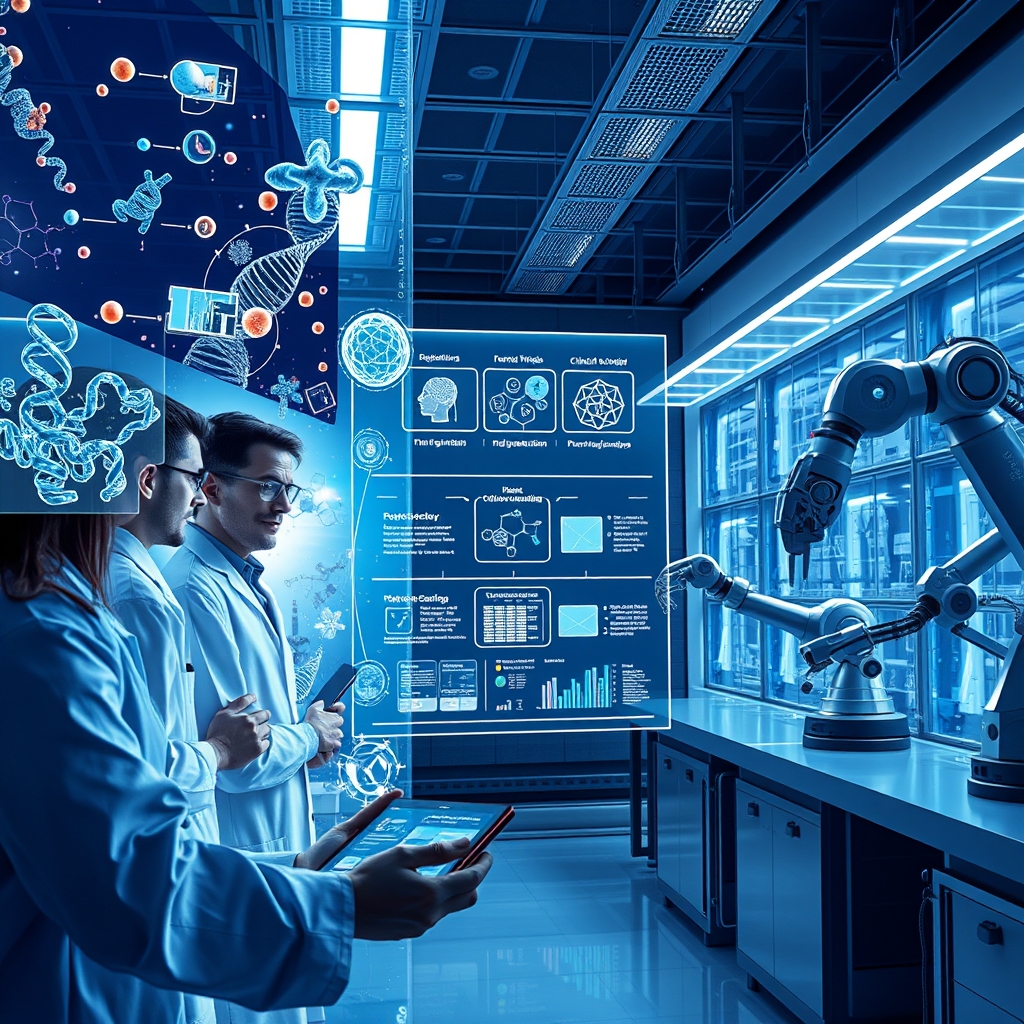
The pharmaceutical industry has long been characterized by high costs, lengthy timelines, and a staggering failure rate in drug development. Traditional drug discovery processes can take over a decade and cost billions of dollars, with no guarantee of success. However, the advent of artificial intelligence (AI) is revolutionizing this landscape, offering unprecedented speed, precision, and efficiency in identifying and developing new therapies. From target identification to clinical trials, AI is not just a tool but a transformative force reshaping the future of medicine.
The AI Revolution in Drug Discovery
AI’s role in drug discovery begins at the molecular level. Machine learning (ML) algorithms analyze vast datasets—including genomic sequences, protein structures, and chemical compounds—to identify potential drug targets with remarkable accuracy. Unlike traditional methods, which rely on trial and error, AI can predict how a molecule will interact with a biological target, significantly reducing the time and resources required for early-stage research.
One of the most promising applications of AI is in virtual screening. By leveraging deep learning models, researchers can sift through millions of chemical compounds in silico to identify those with the highest likelihood of success. This process, which would take years using conventional methods, can now be completed in days or even hours. Companies like Atomwise and Recursion Pharmaceuticals are pioneers in this space, using AI to accelerate the discovery of novel drug candidates for diseases ranging from cancer to rare genetic disorders.
From Lab to Clinic: AI in Preclinical and Clinical Development
Beyond target identification, AI is streamlining preclinical and clinical development. In preclinical studies, AI models simulate how a drug will behave in living organisms, predicting toxicity, efficacy, and potential side effects before any physical testing begins. This not only speeds up the process but also reduces the need for animal testing, aligning with ethical and regulatory goals.
In clinical trials, AI is addressing one of the biggest bottlenecks in drug development: patient recruitment and trial design. AI-powered platforms analyze electronic health records (EHRs) and real-world data to identify suitable candidates for trials, ensuring diversity and improving the likelihood of success. Companies like Deep 6 AI and Tempus are leading the charge, using AI to match patients with trials in a fraction of the time it would take manually. Additionally, AI can optimize trial protocols by identifying the most effective dosages, reducing the number of participants needed, and even predicting which patients are most likely to respond to treatment.
Success Stories: AI-Driven Breakthroughs
The impact of AI in drug discovery is already being felt, with several high-profile success stories demonstrating its potential. One of the most notable examples is the development of Exscientia’s DSP-1181, a drug candidate for obsessive-compulsive disorder (OCD) that was designed entirely using AI. The molecule progressed from concept to clinical trials in just 12 months—a process that typically takes four to five years. While DSP-1181 is still undergoing trials, its rapid development underscores the transformative power of AI in pharmaceutical R&D.
Another groundbreaking example is BenevolentAI’s work on amyotrophic lateral sclerosis (ALS). By analyzing vast amounts of biomedical literature and clinical data, BenevolentAI identified a previously overlooked drug target for ALS. The company then repurposed an existing drug, baricitinib, which is now in clinical trials for the disease. This approach not only accelerates development but also reduces costs by leveraging existing compounds.
AI is also making waves in the fight against infectious diseases. During the COVID-19 pandemic, AI played a crucial role in identifying potential treatments. For instance, Google DeepMind’s AlphaFold predicted the 3D structures of proteins associated with SARS-CoV-2, providing critical insights for vaccine and drug development. Similarly, AI models were used to screen existing drugs for repurposing, leading to the identification of candidates like remdesivir and dexamethasone.
Key Players in the AI-Pharma Ecosystem
The AI-pharma space is rapidly evolving, with a growing number of companies and collaborations driving innovation. Some of the key players include:
- Exscientia: A leader in AI-driven drug design, Exscientia has partnered with pharmaceutical giants like Sanofi and Bristol Myers Squibb to develop novel therapies.
- BenevolentAI: Known for its AI platform that mines biomedical data, BenevolentAI has collaborations with AstraZeneca and Novartis.
- Recursion Pharmaceuticals: Uses AI and automation to discover new treatments for rare diseases and cancer.
- Insilico Medicine: Focuses on AI-generated drug candidates, with a pipeline that includes treatments for fibrosis and cancer.
- IBM Watson Health: Leverages AI to analyze clinical and real-world data, aiding in drug discovery and patient care.
These companies are not only advancing AI-driven drug discovery but also fostering partnerships with academic institutions and traditional pharmaceutical companies, creating a collaborative ecosystem that accelerates innovation.
Ethical Considerations and Challenges
While the potential of AI in drug discovery is immense, it is not without ethical and practical challenges. One of the primary concerns is data bias. AI models are only as good as the data they are trained on, and if the data is not representative of diverse populations, the resulting drugs may not be effective for everyone. For example, clinical trials have historically underrepresented women and minority groups, leading to gaps in data that could perpetuate health disparities if not addressed.
Another ethical consideration is transparency. AI models, particularly deep learning algorithms, are often described as “black boxes” because their decision-making processes are not easily interpretable. This lack of transparency can be problematic in a field as regulated as pharmaceuticals, where stakeholders—including regulators, clinicians, and patients—need to understand how and why a drug was developed. Efforts are underway to develop explainable AI (XAI) models that provide greater clarity, but this remains an ongoing challenge.
Intellectual property (IP) and ownership are also contentious issues. Who owns the rights to an AI-generated drug? Is it the company that developed the AI, the researchers who trained the model, or the institution that provided the data? These questions are still being debated, and clear guidelines are needed to ensure fair compensation and incentivize innovation.
Finally, there is the question of job displacement. As AI automates more aspects of drug discovery, there are concerns about the impact on researchers and scientists. However, many experts argue that AI will augment rather than replace human expertise, freeing scientists to focus on more creative and strategic aspects of drug development. The key will be ensuring that the workforce is equipped with the skills needed to work alongside AI.
The integration of AI into drug discovery is not just a technological shift but a paradigm change in how we approach medicine. By harnessing the power of AI, researchers can uncover new treatments faster, more affordably, and with greater precision than ever before. Yet, as with any transformative technology, the journey is not without its hurdles. Ethical considerations, data biases, and regulatory challenges must be addressed to ensure that AI-driven drug discovery benefits all of humanity, not just a privileged few. As the field continues to evolve, collaboration between AI developers, pharmaceutical companies, regulators, and ethicists will be essential to unlocking its full potential. The future of medicine is being written today, and AI is holding the pen—guiding us toward a new era of innovation, hope, and healing.